To keep an organization moving in today’s complex business environment, it simply indicates handling various procedures such as finance, human resources, sales, customer relationships, and inventory, usually using tools that do not communicate with each other. This partial approach might lead to increased costs, inefficiencies, and missed opportunities. The owners of the organization require a solution that streamlines workflows, gives real-time control over operations, and ensures procedures run smoothly.At this point, Odoo ERP Modules come in. Crafted to simplify the most difficult workflows, these modules enable organizations to access accurate data, make smarter decisions, and automate routine tasks all in a single platform.

What Are Odoo ERP Modules?
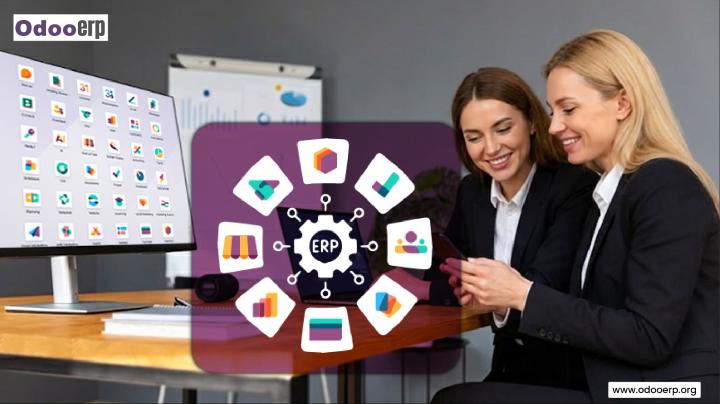
Odoo ERP Modules are unique and specific applications that tend to concentrate on individual business functions, but combine smoothly with each other to form a complete ERP System. Whether it is about streamlining HR tasks, handling finances, automating marketing, or tracking inventory, every module manages a specific area of operations, along with communicating with others to craft a connected workflow.
This modular approach enables organizations to expand over time and start with essentials. It is especially beneficial for expanding organizations that require smoothness without the chaos of a stiff, costly system.
What are the Types of Odoo ERP Modules?
Odoo tends to provide various core modules with multiple community-developed add-ons that expand its abilities. Here are its types:
Finance and Accounting- It tends to automate financial reporting, invoicing, payments, and budgeting.
Warehouse and Inventory- It tends to track shipments, deliver on time, and manage stock levels.
Manufacturing- It can handle bills of materials, track operations, and plan production schedules.
Project Management- It allows you to collaborate with teams, assign projects, and track progress effectively.
CRM and Sales- It allows you to handle quotes, order pipelines, customer relationships, and leads.
Email and Marketing Automation- It allows you to segment audiences, track conversion rates, and run campaigns.
E-Commerce- It handles orders, product listings, and pricing through virtual stores.
Human Resources- The role of human resources is to manage employee records, performance management, recruitment, and payroll.
What are the Key Characteristics of Odoo ERP Modules?
1. User-Friendly Interface- It is crafted for users without technical expertise, which makes the adoption easier and instant.
2. Seamless Integration- Every module is crafted to collaborate and work together, making sure that data flows seamlessly between departments. 3. Scalable Design- All organizations can expand more modules as they prosper without disturbing existing operations. 4. Real-Time Data- Quicker access to all the updated information helps managers make data-driven decisions. 5. On-Premsie and Cloud Options- It provides deployment smoothness relying on accessibility and security needs. 6. Customization-Friendly- All the modules can be crafted to meet the specific requirements of an organization, providing flexibility without sacrificing performance.
What Makes Odoo ERP Modules Unique?
Cost-Effective- Through customizable configurations and open-source options, organizations can access powerful tools while controlling expenses.
Modular Structure- The organizations can scale and apply what they require as they expand without replacing systems.
One-Stop Platform- No need to reconcile data from disparate tools or manage several subscriptions.
Enterprise and Community- Editions Depending on your needs, you can use sophisticated enterprise-grade technologies or free, community-driven solutions.
Fundamentally, automation speeds up repetitive activities, minimises errors, and reduces the need for manual intervention.
Sector-Specific Remedies- There is a module designed to meet your needs, regardless of your industry retail, manufacturing, education, or services.
Because of its cost, versatility, and connectivity, Odoo ERP Modules are a reliable option for companies of all kinds.
Choosing the Right Modules for Your Business
The size, structure, and expansion objectives of your business all influence the Odoo modules you choose. Here's how to go about making the choice:
Determine Your Pain Points- Determine which regions are most inefficient or prone to mistakes.
Start with Core Functions- Start with the most basic modules, such as inventory, CRM, or accounting, and work your way up.
Speak with Experts- To customise the modules to your workflows, collaborate with an Odoo specialist.
Plan for Scalability- Select modules that will easily accommodate the addition of additional functionality as your company expands.
Put Integration First: Ensure that the modules you choose work well with the tools and procedures you already have.